
The Great Leap Forward: How Vestige and Ecolane Modernized Public Transit
A Case Study on the Power of Smart Cameras and Intelligent Routing
When a Michigan public transit agency set out to modernize its fleet, the agency’s leadership faced a challenge familiar to public transit leaders everywhere: how to safely and efficiently transport more riders with limited staff, growing demand, and persistent rider scrutiny over performance.
The answer came from pairing two technologies that work far better together than apart — Ecolane’s automated dispatching and routing platform and Vestige’s connected vehicle and body camera system.
Together, they have transformed the agency into a model of accountability, transparency, and operational precision.
Before the Transformation: Manual Processes and Limited Visibility
For decades, the Michigan agency managed its operations through a patchwork of manual tools, local knowledge, and phone calls. Dispatchers sometimes spent up to 45 minutes booking a single passenger’s trips, while drivers relied on printed schedules and paper logs.
According to Operations Manager Nikki Grover, who has served at the agency for over 27 years, “We made it run as fast as we could, but it was a lot of moving parts without much visibility once the vehicles left the garage.”
Without modern technology, accountability depended on word of mouth. When accidents or complaints occurred, it was nearly impossible to verify what had happened. She knew from experience during her early days with the agency as a driver.
“I was sideswiped once,” Grover recalled, “and we didn’t have any cameras. There was nothing to prove it, nothing to learn from.”
This lack of visibility also made it hard for management to respond quickly to incidents, protect drivers, or gather data needed for state and federal reporting. For Deputy Director of Transportation Adam Baranski, who began as a driver himself, the challenge was clear:
“We were managing a complex operation without real-time information. We had no quick way to know if a driver was okay or how an incident unfolded.”
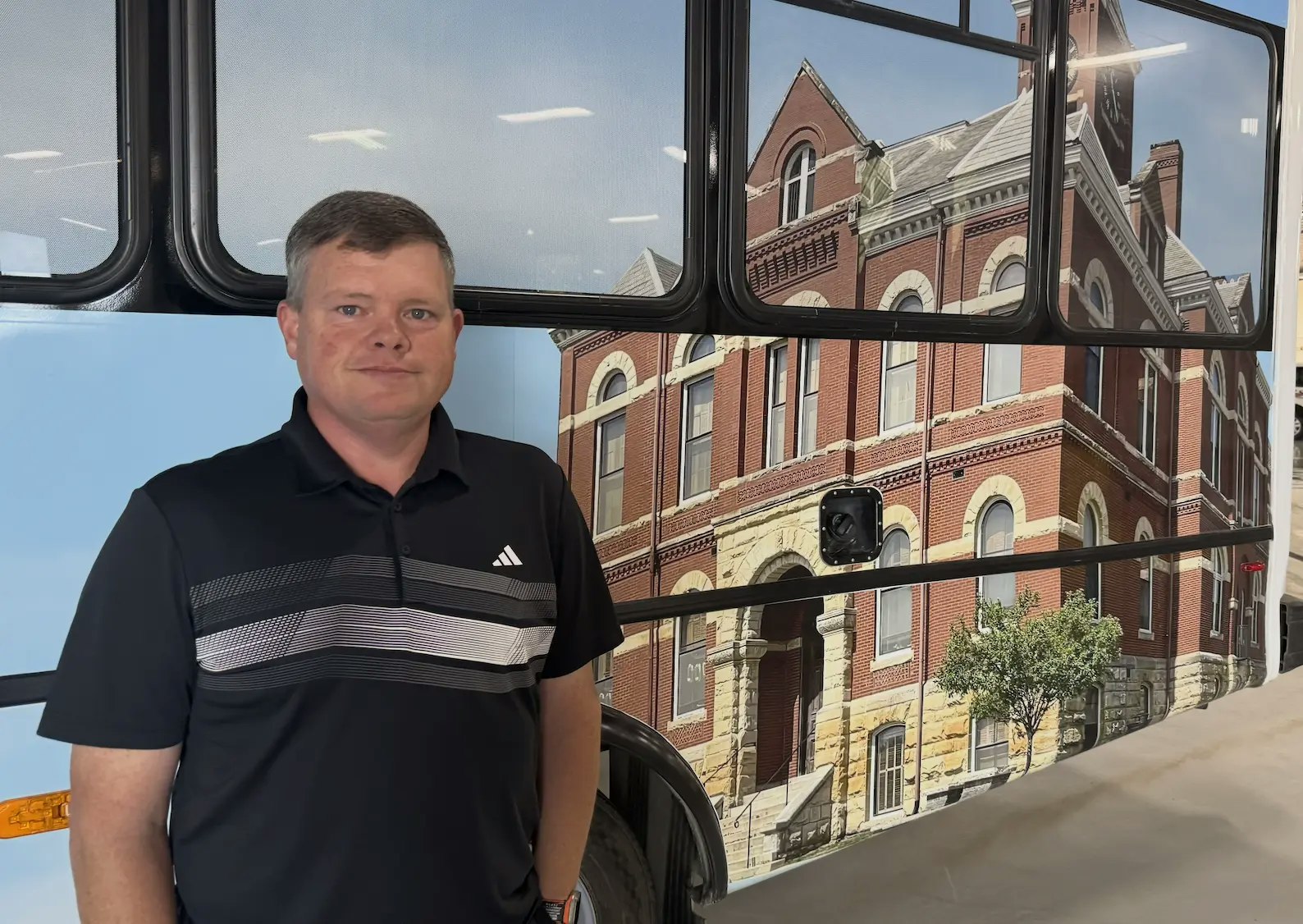
How Adam Baranski Leverages Ecolane by Transit Technologies to Support His Regional Transportation
“It’s about getting people to work,
That’s become over 60 percent of what we do now –
helping people stay employed and connected.”
— Adam Baranski
Step One: Digitizing Dispatch with Ecolane
The first major upgrade came with the implementation of Ecolane’s automated scheduling and dispatching system, branded locally for the ridership as the Let’s Go app.
The goal was simple but ambitious:
- increase ridership
- shorten ride times
- and streamline dispatcher workloads
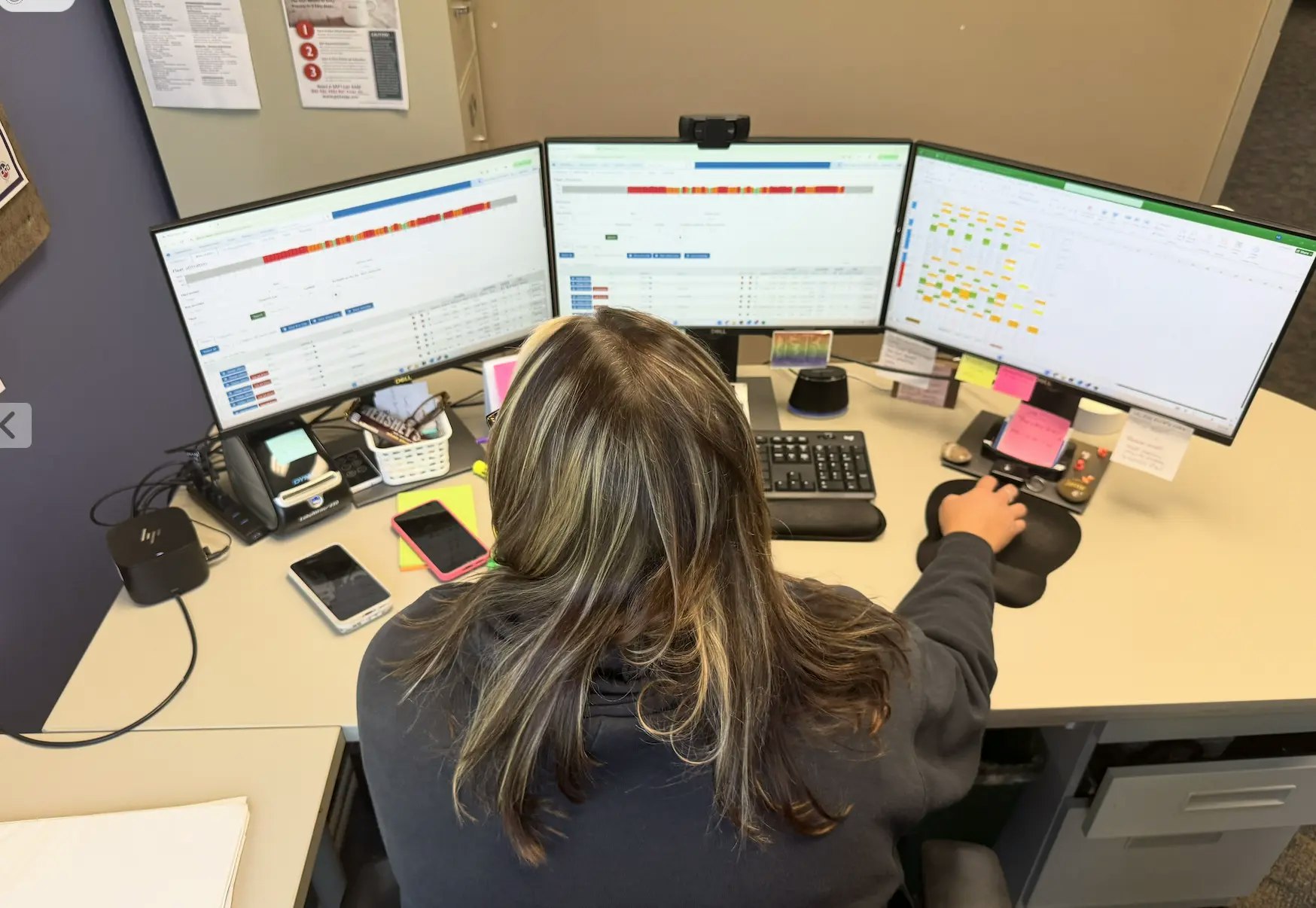
Before Ecolane, every ride was manually booked over the phone, and dispatchers spent hours mapping routes for drivers.
Ecolane changed that overnight. The platform’s routing engine optimized trips automatically, cutting the time required for booking and routing while improving the rider experience.
“Now, we can handle multiple requests at once,” Grover explained. “The system does the routing for us, so dispatchers can focus on customer service instead of paperwork.”
The agency immediately saw results.
Average ride times dropped by three minutes per passenger, and dispatch efficiency improved dramatically.
Riders began to enjoy faster pickups, better reliability, and new self-service options through the Let’s Go mobile app – which allowed them to book, check, or cancel rides 24/7.
Today ridership is up nearly 50 percent with entire new populations adopting the service. Grover and Baranski said the number of employees needing rides to and from work has exploded thanks to the mobile app, transforming employment opportunities for hundreds if not thousands across the region.
And the number of riders needing to get to and from doctor’s appointments or other essential trips has also ticked up.
By separating on-demand rides from recurring routes, the software also helps the agency serve more passengers per day without increasing vehicle miles.
“It’s about getting people to work,” Baranski said. “That’s become over 60 percent of what we do now – helping people stay employed and connected.”
Step Two: Building Safety and Accountability with Vestige
Once the dispatch and routing system was automated, the agency turned its attention to what happens on the road.
Like many public transit systems, the public transit organization operates a diverse fleet – from small vans to large buses – serving everyone from students to seniors to riders with disabilities.
Each group brings unique safety needs, especially for wheelchair passengers and those requiring driver assistance.
To meet these challenges, the fleet adopted Vestige’s multi-camera vehicle and body-worn camera system.
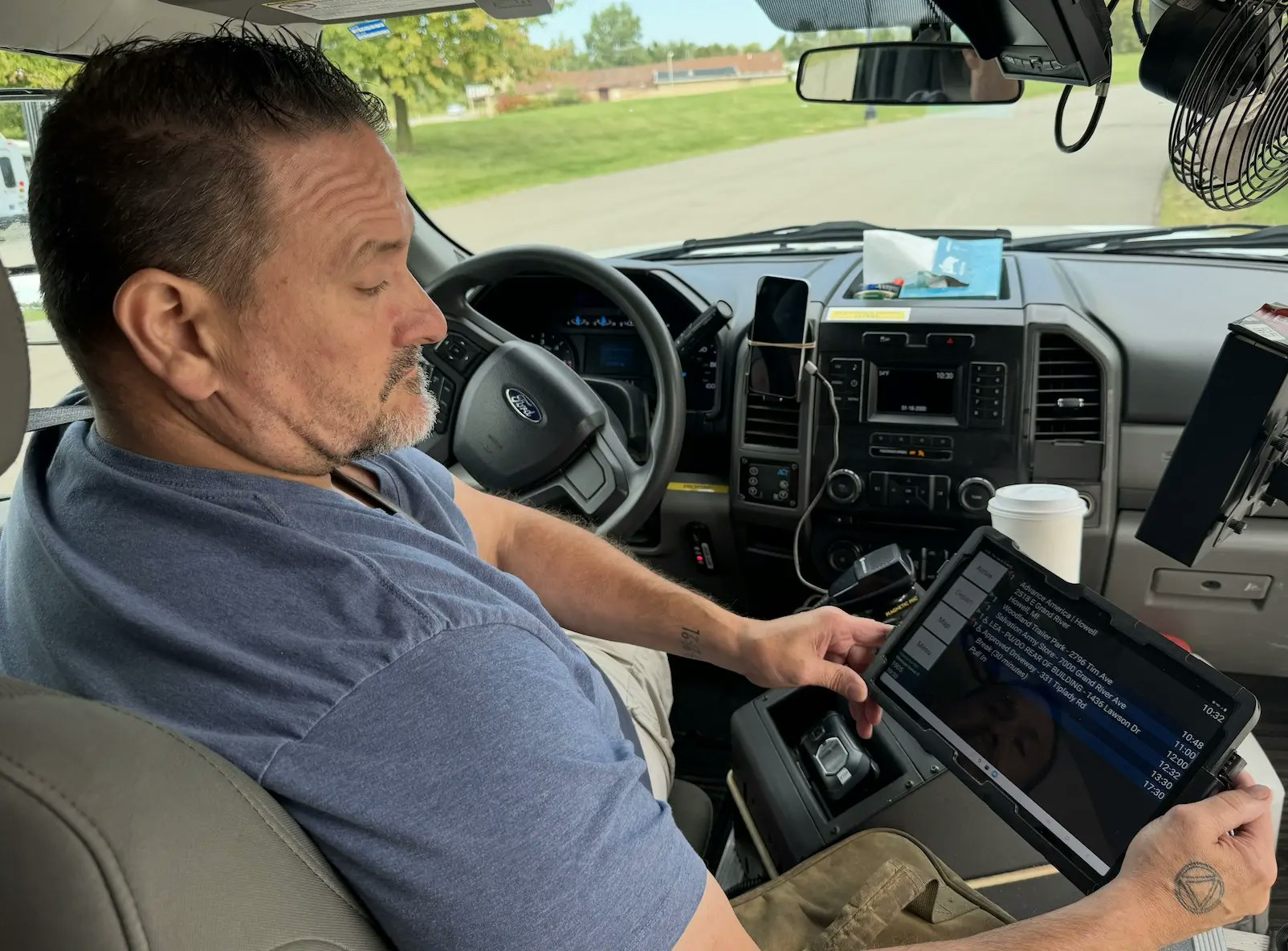
Each vehicle now carries three to five high-definition cameras, depending on size — covering the road, driver, passenger cabin, and wheelchair lift. Drivers assisting vulnerable passengers or entering private residences also wear Vestige body cameras for personal safety and transparency.
The decision wasn’t made lightly.
“We were initially cautious,” Grover said. “Nobody wants to feel watched. But once we saw how the cameras helped in real situations, that changed everything.”
Vestige’s cloud-based video platform eliminated the headaches of older systems that required physical hard drives to be removed and downloaded – a process that once took hours. Critical footage can now be accessed instantly from any location.
“Before Vestige, we had to wait until the bus came back to pull footage,” Baranski said. “Now we can review an incident in real time and decide immediately if a driver needs to be taken off the road or sent for testing.”
This instant visibility has reshaped the organization’s culture of accountability.
When complaints come in, Grover can quickly pull the relevant video to verify what happened. If the complaint is valid, the footage becomes a training opportunity; if not, the driver is cleared with confidence.
“It’s protection for everyone: the rider, the driver, and the agency,” Grover noted. “There’s no more guessing.”
Real-Time Optimization at the Trip Level
Ecolane supports NEMT and paratransit operations by optimizing service at the individual trip level and updating schedules as conditions change during the service day. The result: more efficient, reliable service without rebuilding schedules or relying on workarounds.

Adjust service as trips change
Account for no-shows, cancellations, delays, and staffing changes without rebuilding schedules manually

Improve vehicle and driver utilization
Increase rides per hour using dynamic scheduling rather than fixed assumptions

Meet safety standards
Integrated in-vehicle and external cameras provide advanced rider monitoring.

Support ADA and NEMT Requirements
Eligibility rules, reporting, and compliance are integrated into daily operations
Connecting the Systems: Data, Response, and Real-Time Decision-Making
The true breakthrough came when Vestige and Ecolane began working in tandem.
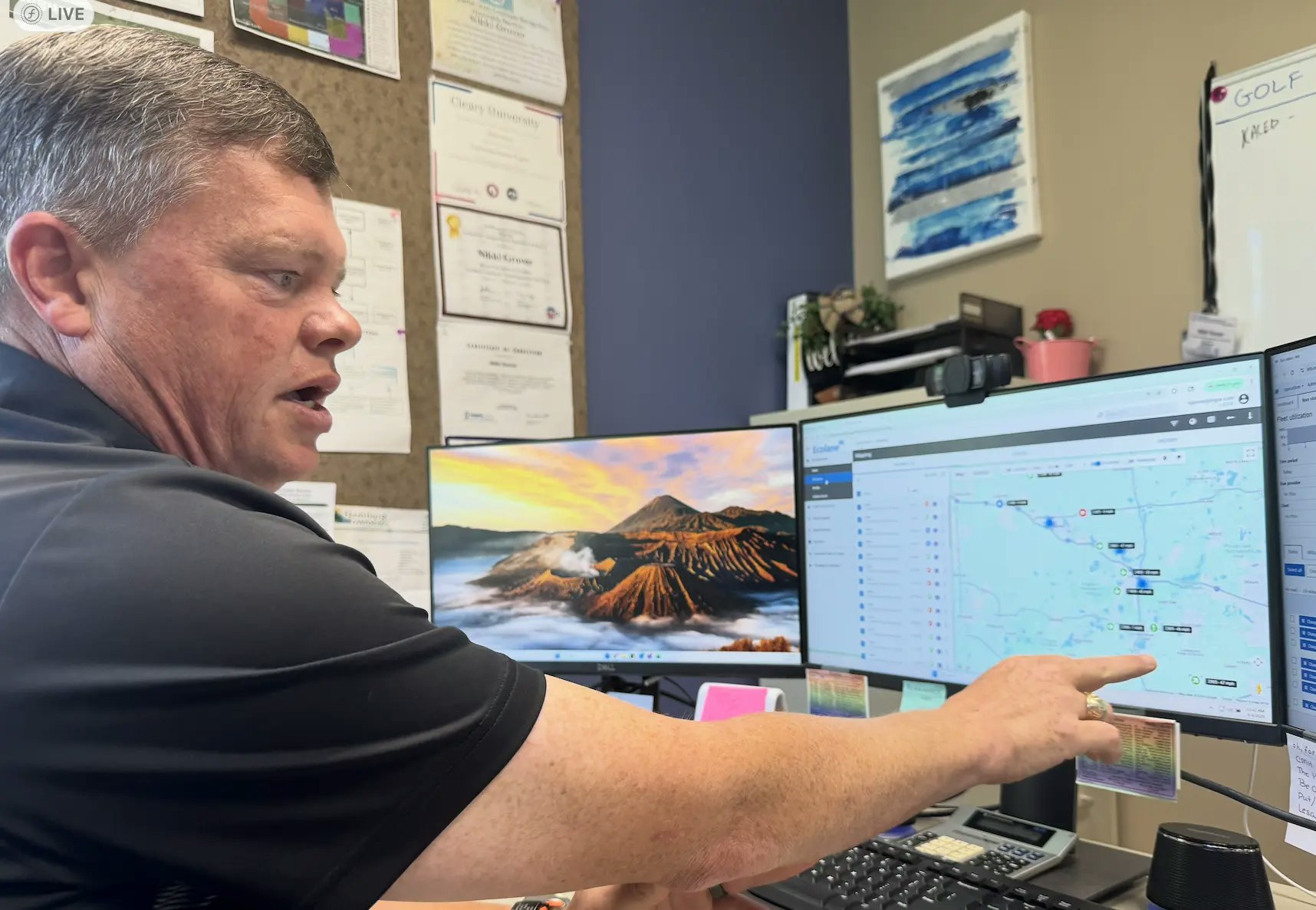
The integration allows live GPS and video data from Vestige cameras to be visible alongside route and trip information in Ecolane’s dashboard.
This connection bridges the gap between dispatch and the road. When an incident occurs – whether it’s a passenger emergency, a mechanical issue, or a safety concern – dispatchers can now view the live vehicle feed while also seeing exactly where the driver is supposed to be and what trips are impacted.
The result is faster, more informed responses.
“We had a passenger issue once,” Baransky recalled. “The driver used the panic button, and we could see the situation live. We sent help right away. Before, that would’ve been a phone call and a lot of uncertainty.”
The dual system also enhances training and continuous improvement.
Supervisors use Vestige footage – with sensitive information blurred – to teach proper procedures for wheelchair securement, customer interaction, and defensive driving.
Meanwhile, Ecolane’s reports provide detailed analytics on trip volume, efficiency, and service performance, which feed into both funding applications and internal performance reviews.
Together, the systems create a closed feedback loop:
- Ecolane plans and tracks the work
- Vestige verifies and enriches it with context
- Dispatchers and managers use both to refine service quality and safety protocols
Community and Economic Impact
The agency’s unique geography – bisected by two major freeways and a rapidly growing population – makes transportation a vital connector between residents and opportunity.
With the combined power of Ecolane and Vestige, the agency has been able to expand capacity without adding staff or vehicles. The agency now transports 70–100 students daily in addition to hundreds of adult riders.
The technology ensures that every mile counts.
By automating routes and monitoring driver performance, the organization maximizes efficiency and minimizes wasted time, keeping more people moving with the same resources.
It also builds community trust. Complaints that once relied on hearsay are now handled transparently. Riders know their safety and dignity are protected; drivers know they’re supported by objective evidence.
“It’s changed how people see public transit here,” Grover said. “We’re not just buses on the road; we’re professionals with technology that proves how seriously we take our job.”
Lessons Learned and Future Plans
Implementing two major systems required patience and communication.
The payoff is clear:
- Faster dispatch and booking: reduced phone time, faster routes.
- Real-time safety oversight: instant access to footage and panic alerts.
- Greater accountability: verified responses to every incident.
- Improved driver morale: protection from false claims and fair assessments.
- More rides completed: increased service efficiency and reduced denials.
Looking ahead, the Michigan transit agency plans to leverage the growing dataset from both platforms to forecast demand, refine scheduling, and continue improving rider experience.
Baranski envisions even tighter integration between video analytics and dispatch data.
Conclusion: Technology with a Human Touch
This story of modernization isn’t just about adopting technology.
It’s about empowering people. Dispatchers who once juggled phone lines now focus on service. Drivers who once feared accusations now have protection.
Riders who once faced uncertainty now travel with confidence.
By combining Ecolane’s intelligence with Vestige’s visibility, the agency has built a transportation ecosystem defined by efficiency, safety, and trust: proof that when data and video work hand in hand, communities move forward together.
“These tools make us better at what we do,” Grover said. “They keep our people safe, our riders happy, and our operations running smoother than ever.”

Curious about what Ecolane could do for your agency?
See first hand how you can create a more efficient and effective transit operation with modern scheduling, routing, tracking & reporting from Ecolane.